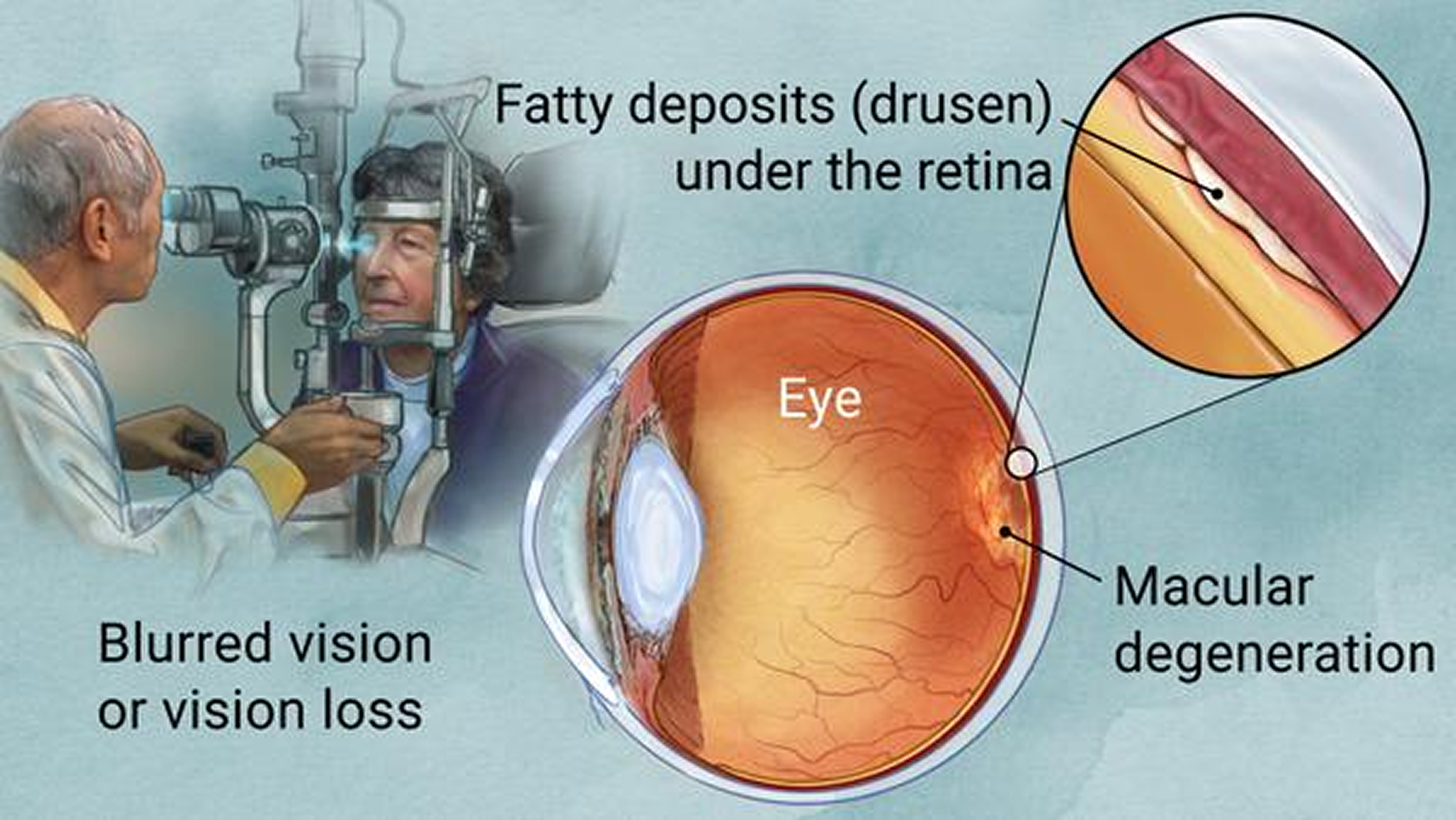
Macular degeneration is an eye condition that damages the macula, the central part of the retina responsible for sharp, detailed vision. When this area is affected, central vision gradually declines, making it harder to see clearly and perform everyday tasks. Common warning signs of macular degeneration include a slow reduction in the ability to see objects clearly, even when wearing glasses. Objects may begin to look misshapen or distorted, and straight lines can appear bent, wavy, or uneven. This condition most commonly affects adults over the age of 50. It can have a major impact on daily life, making activities such as reading, recognizing faces, driving, writing, and using digital devices more challenging. The treatment for macular degeneration often delivering gentle microcurrent through closed eyelids, thereby stimulating the retina. This approach helps improve and preserve vision in patients with dry AMD (Age-Related Macular Degeneration).
What Does Treatment for Macular Degeneration Involve
Dry age-related macular degeneration (AMD) affects several million people worldwide and remains one of the leading causes of gradual vision loss. For many years, individuals diagnosed with this condition had limited treatment choices, with most care plans focused only on slowing the disease rather than improving vision. The treatment for macular degeneration is evolving, offering new hope and changing expectations for millions of patients around the world.
Macular degeneration is far more than a medical diagnosis related to eyesight. It is a condition that can reshape nearly every aspect of daily life. The disease damages the macula, the central part of the retina responsible for sharp and detailed vision. As this area weakens, people often struggle with reading, recognizing faces, driving, cooking, writing, and using phones or computers. Activities that once seemed simple may become difficult, frustrating, or impossible without help.
The emotional impact can be just as significant as the physical symptoms. Many people experience fear and uncertainty after diagnosis, especially if they have seen parents or relatives cope with the same condition. Because age-related macular degeneration may run in families, some individuals worry that their future will follow a similar path. Concerns about losing independence, no longer being able to drive, or failing to recognize loved ones can create intense anxiety. Over time, declining confidence may lead some patients to avoid social situations, withdraw from hobbies, or depend heavily on family members for support.
Recent progress in medical technology has introduced a promising new approach in the treatment for macular degeneration, which involves microcurrent stimulation therapy. This technique uses gentle electrical currents, a technology that has been used safely in various healthcare settings for many years. It is now being explored as a way to support retinal health and improve visual function in people living with dry AMD. Instead of focusing only on slowing damage, this method aims to stimulate retinal cells and encourage better visual performance. For many patients, that possibility brings renewed optimism.
Microcurrent stimulation is designed to be simple, comfortable, and non-invasive. It does not involve injections into the eye, surgical procedures, laser treatments, or medication-based regimens. During a scheduled clinic visit, the patient relaxes while wearing a therapeutic device for approximately thirty minutes. Gentle currents are delivered in a controlled manner, typically through closed eyelids, while the patient remains comfortable.